★ Bangkok: Free Delivery 🛡️ Nationwide: Fast & Secure Shipping




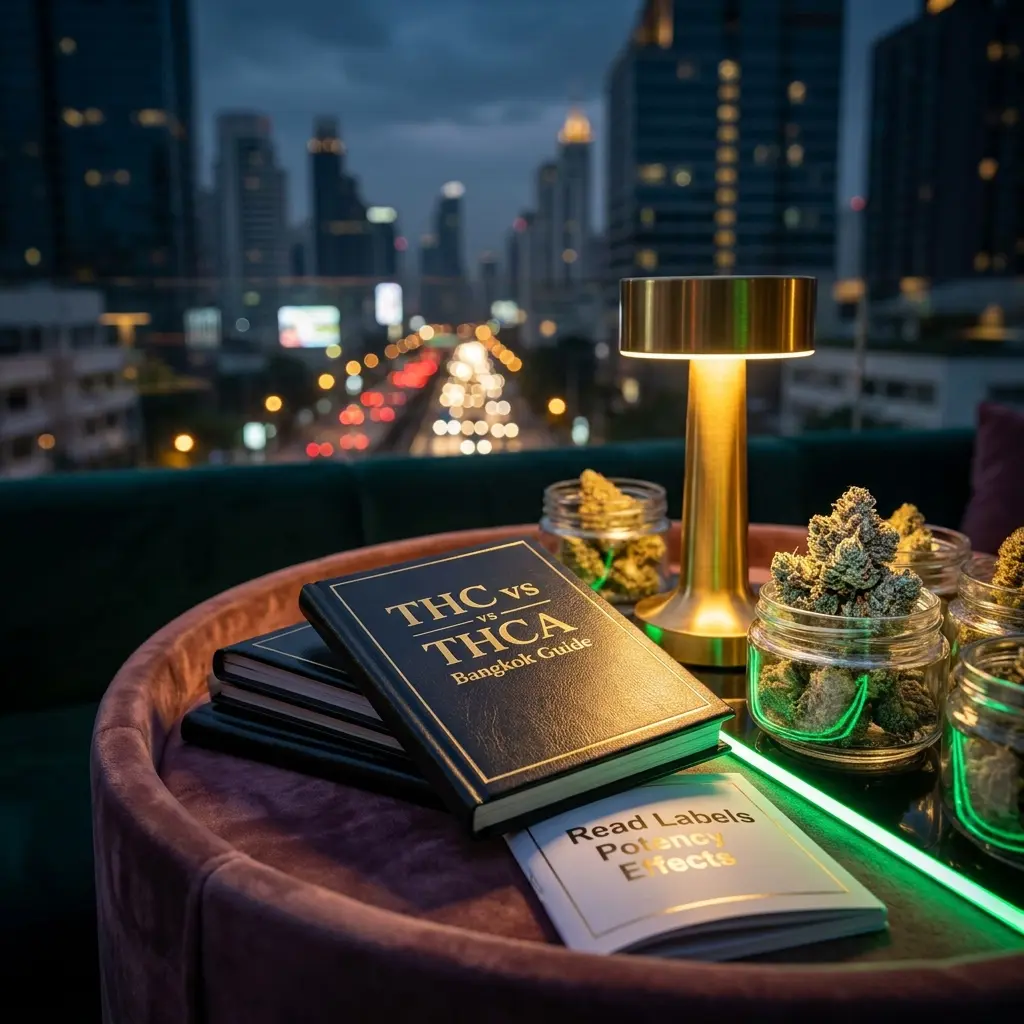
THC vs THCA is one of the most useful cannabis basics to understand before buying flower, rosin, or edibles in Bangkok. The short version: THCA is the raw, acidic form commonly found in fresh cannabis flower, while THC is the activated compound mainly responsible for the classic cannabis high. The difference matters because heat changes THCA into THC, which affects potency, effects, dosing, lab labels, edibles, legal interpretation, and drug testing risk. If you are comparing products in Sukhumvit, Asok, Thonglor, or a quieter lounge near Phrom Phong, knowing this difference helps you read menus with more confidence instead of choosing only by strain name or headline percentage.
THC vs THCA: The Simple Difference
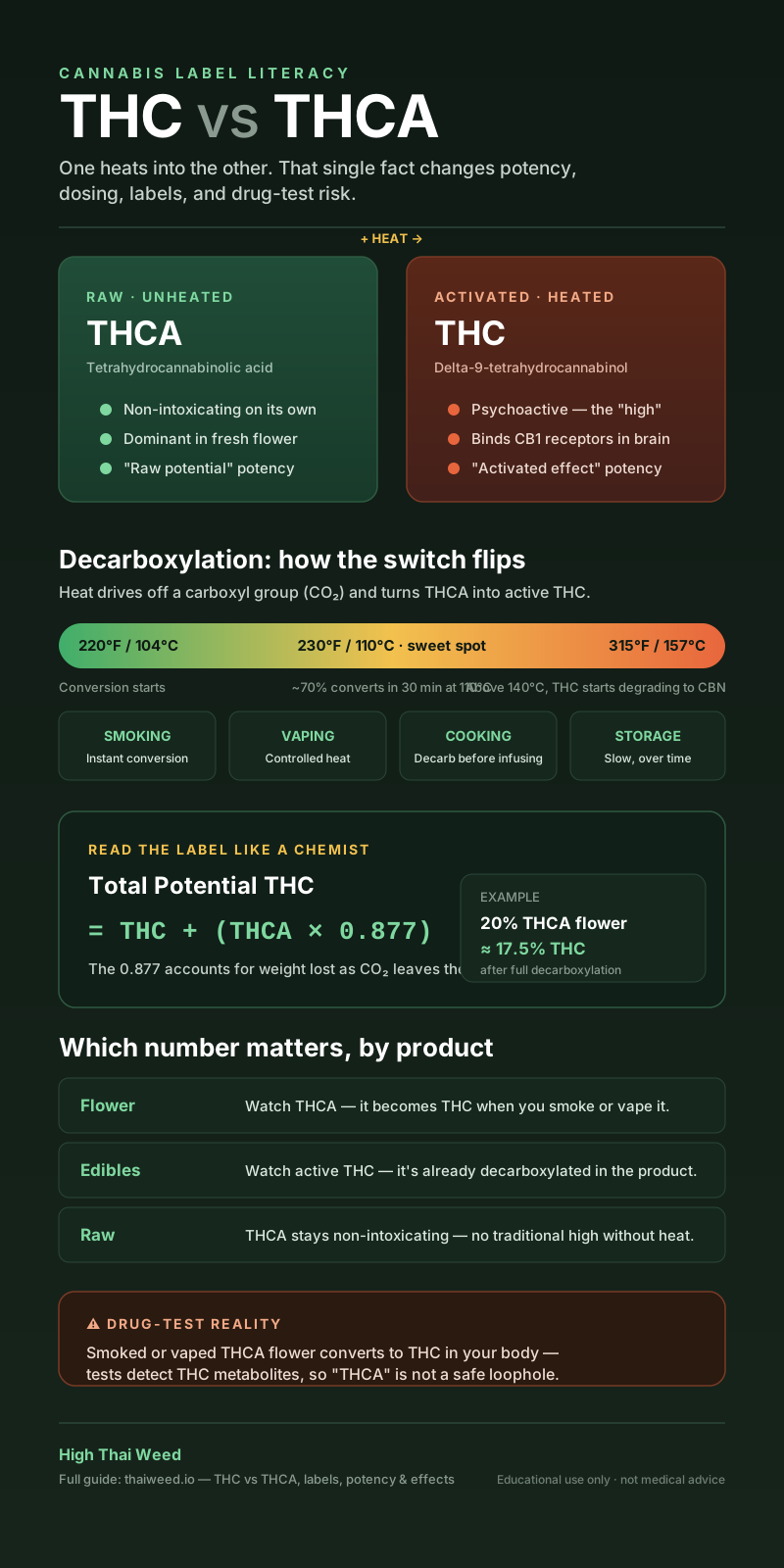
THCA stands for tetrahydrocannabinolic acid. It is the natural, non-intoxicating cannabinoid found in raw or freshly harvested cannabis. Most cannabis flower does not start out packed with active THC. Instead, it usually contains much more THCA, which becomes THC when exposed to heat, time, or certain processing conditions.
THC stands for delta-9-tetrahydrocannabinol. This is the activated cannabinoid most people mean when they talk about cannabis feeling “strong,” euphoric, relaxing, heavy, giggly, or mentally intense. THC binds more directly with CB1 receptors in the brain, which is why it produces noticeable psychoactive effects.
The easiest way to think about it:
- THCA = raw potential in unheated cannabis.
- THC = activated effect after heat or decarboxylation.
- Smoking or vaping flower rapidly converts much of the THCA into THC.
- Edibles usually use cannabis that has already been decarboxylated so the THC is active before you eat it.
- Raw cannabis may contain THCA but does not usually create the same high as smoked or vaped cannabis.
This is also why product labels can confuse first-time buyers. A flower menu may show high THCA and low THC, but that does not mean the flower is weak. Once heated, much of that THCA can convert into THC. If you are new to local dispensary labels, it is worth reading up on buying legal cannabis (THC vs THCA considerations) before assuming a number means the same thing across flower, extracts, and edibles.
What Is THCA in Cannabis?
THCA is the cannabinoid cannabis plants produce before THC becomes active. In living or freshly dried cannabis, THCA is usually the dominant form. It sits in the resin glands, or trichomes, along with terpenes and other cannabinoids.
On its own, THCA is not usually considered intoxicating in the same way THC is. That is why raw cannabis leaves or raw flower do not behave like a smoked joint. Some wellness-focused consumers are interested in raw cannabis THCA for potential therapeutic differences, but research is still developing and should not be treated as settled medical proof.
In practical terms, THCA matters because it tells you how much THC a product may produce after heating. For flower shoppers in Bangkok, this comes up often when comparing jars that list “THCA %” instead of only “THC %.” A budtender in a premium Sukhumvit or Thonglor setting may explain total potential THC rather than only the active THC already present in the flower.
Is THCA Psychoactive?
THCA is generally described as non-psychoactive because it does not create the same intoxicating high associated with THC. That said, “non-psychoactive” does not mean “irrelevant.” THCA can still be biologically active, and it can become psychoactive THC when heated.
This distinction matters in real life. If someone eats a small piece of raw cannabis flower, they should not expect the same effect as smoking it. If that same flower is heated in a vaporizer, joint, pipe, oven, or extraction process, the cannabinoid profile changes significantly.
What Is THC and Why Does It Feel Stronger?
THC is the cannabinoid most closely linked with the classic cannabis high. It can influence mood, body sensation, appetite, time perception, sleepiness, sensory awareness, and mental pace. The exact experience depends on dose, tolerance, terpene profile, setting, and the person using it.
In Bangkok’s more relaxed cannabis lounges, especially around Ekkamai, Phrom Phong, and parts of Sukhumvit, staff often guide beginners toward lower-potency flower or smaller servings because THC effects can come on quickly when smoked or vaped. Tourists sometimes underestimate this after a long flight, a few drinks, or a hot day walking between BTS stations. THC can feel stronger when you are tired, dehydrated, or in an unfamiliar environment.
Common THC effects may include:
- Euphoria or mood lift
- Body relaxation
- Increased appetite
- Altered time perception
- Enhanced music, food, or conversation
- Sleepiness at higher doses
- Anxiety, racing thoughts, dry mouth, or dizziness in sensitive users
THC side effects are usually dose-related. A small amount may feel social and manageable, while too much can feel uncomfortable, especially for beginners. That is why pacing matters more than chasing the highest percentage on the menu.
How Decarboxylation Works: How THCA Converts to THC
Decarboxylation is the chemical process that removes a carboxyl group from THCA and converts it into THC. Heat speeds this process up. This is why smoking, vaping, baking, pressing, and cooking can all change cannabinoid chemistry.
In everyday cannabis use, decarboxylation happens in a few common ways:
- Smoking: flame instantly heats flower, converting THCA into THC as you inhale.
- Vaping: controlled heat activates cannabinoids without direct combustion.
- Cooking: cannabis is usually heated before being infused into butter, oil, or other edible bases.
- Extract processing: heat and pressure can partially or fully convert cannabinoids depending on the method.
- Storage over time: slow conversion can happen naturally, especially with heat, light, and poor storage.
Does cooking cannabis increase THC? Not exactly. Cooking does not magically create more total cannabinoid content. It converts THCA into THC, making more of the existing cannabinoid content psychoactive. Too much heat for too long can also degrade THC into CBN and other compounds, which may feel heavier or sleepier.
For concentrates, the THC vs THCA distinction can be especially important. Some extracts preserve high THCA content, while others are already activated. In solventless products such as rosin extracts and decarboxylation, pressure, temperature, and post-processing can influence how much THCA remains versus how much becomes THC.
How Long Does THCA Take to Convert to THC?
There is no single time that applies to every situation. Conversion depends on temperature, moisture, product type, airflow, and exposure time. A lighter flame converts THCA almost instantly during smoking. A vaporizer converts it as the flower reaches activation temperature. Low-temperature cooking takes longer. Warm storage may slowly increase THC over weeks or months, though it can also reduce freshness and terpene quality.
For consumers, the practical takeaway is simple: if cannabis is heated enough, expect THCA to become THC and expect stronger psychoactive potential.
THC Potency vs THCA Potency: How to Read Labels
Lab results can be confusing because some labels show THC, some show THCA, and some show “total THC.” These are not the same number.
A common formula used to estimate potential THC is:
Total potential THC = active THC + (THCA × 0.877)
The 0.877 adjustment accounts for the weight lost when THCA converts into THC. In plain language, 20% THCA does not become exactly 20% THC. It becomes a little less than that in theoretical maximum terms, and real-world conversion is rarely perfect.
For example, a flower labeled with very high THCA and low active THC may still be potent when smoked or vaped. A product labeled with already active THC, such as many edibles or some oils, should be treated differently because the THC is already available without needing combustion.
This is one reason strain shopping is more useful when you look beyond a single number. Terpenes, freshness, cure quality, cannabinoid balance, and your own tolerance all shape the experience. Browsing cannabis strains and cannabinoid profiles can help you compare products with more context than “highest THC wins.”
Which Is Stronger: THCA or THC?
If you mean “which gets you high,” THC is stronger because it is already psychoactive. If you mean “which indicates potential potency in flower,” THCA is often the number to watch because it can convert into THC when heated.
So the answer depends on the product:
- Raw flower: THCA may be high, but effects depend on heating.
- Smoked or vaped flower: THCA becomes THC, so the flower can feel strong.
- Edibles: active THC matters more because the product should already be decarboxylated.
- Raw cannabis products: THCA may matter for non-intoxicating cannabinoid interest, not for a traditional high.
THCA vs THC Effects in Flower, Edibles, and Raw Cannabis
The difference between THC and THCA becomes much clearer when you look at how cannabis is actually consumed.
THC vs THCA in Flower
Most dried cannabis flower contains mostly THCA before use. When smoked or vaped, the heat activates it. This is why flower with high THCA can still be powerful even if the label shows only a small amount of active THC.
In Bangkok dispensaries, especially those serving tourists near Nana, Asok, and lower Sukhumvit, the menu may use simplified THC percentages because many visitors are not familiar with cannabinoid conversion. More detailed shops may show lab-style numbers with THCA, THC, CBD, and terpenes. If in doubt, ask whether the listed number is active THC or total potential THC.
THC vs THCA in Edibles
Edibles are different because the cannabis usually needs to be activated before infusion. A brownie, gummy, chocolate, or drink made with raw THCA-rich cannabis would not produce the same predictable effect as one made with decarboxylated THC.
This is why edible dosing deserves extra caution. Smoked THC is felt quickly, while edible THC can take much longer and feel stronger once metabolized. In a Bangkok travel context, that matters. Taking an edible before a rooftop dinner, a BTS ride across town, or a crowded nightlife area can become uncomfortable if the dose comes on later than expected. Learn more about how edibles use activated THC (not raw THCA) before choosing a dose.
Raw Cannabis THCA
Raw cannabis is sometimes discussed for THCA benefits, but expectations should stay realistic. Raw cannabis will not behave like activated THC flower. People interested in raw cannabis THCA are usually looking at non-intoxicating cannabinoid use, not recreational intoxication.
Because cannabis quality, cleanliness, and storage matter, raw consumption should not be casual. Fresh plant material is not the same as a food-grade product, and anyone using cannabis for medical reasons should speak with a qualified healthcare professional.
Medical Cannabis THCA vs THC: Potential Benefits and Limits
THC has more established use in areas such as appetite support, nausea management, pain, sleep, and certain medical cannabis programs, though effects vary by patient and dose. It is also more likely to cause intoxication, anxiety, dry mouth, impaired coordination, and short-term memory changes.
THCA is being studied for potential therapeutic differences, including anti-inflammatory and neuroprotective possibilities, but human evidence is still limited. Many claims online run ahead of the science. A responsible approach is to treat THCA as interesting but not proven as a cure or replacement for medical care.
For medical cannabis users in Thailand, the key question is not only “THCA vs THC effects,” but also how the product will be used. A patient who needs daytime function may not want strong THC intoxication. Another patient may need activated THC under professional guidance. Product format, dose, timing, and legal compliance all matter.
CBD vs THCA
CBD and THCA are both commonly described as non-intoxicating, but they are not the same. CBD is a separate cannabinoid with a different structure and different interaction with the endocannabinoid system. THCA is the acidic precursor to THC.
CBD does not convert into THC through normal heating. THCA can convert into THC. That conversion risk is the major practical difference for anyone concerned about intoxication, workplace rules, travel, or drug testing.
Thailand and Bangkok Considerations: Labels, Law, Etiquette, and Testing
Thailand’s cannabis rules have changed several times since legalization, and they continue to require careful attention. Thailand is not a federal system, so phrases like “federally legal THCA” do not really apply here. Consumers should think in terms of Thai national law, Ministry of Public Health rules, local enforcement, product type, and current licensing requirements.
A few practical points matter in Bangkok:
- Do not assume THCA is a legal loophole. If a product converts into THC or is treated as cannabis under Thai rules, the label alone may not protect you.
- Extracts are treated differently from flower. Thai rules have historically focused heavily on THC levels in extracts, especially the 0.2% THC threshold, but regulations can change.
- Public smoking is poor etiquette and can create legal trouble. Discreet, private, well-ventilated settings are more accepted than smoking near hotels, restaurants, temples, malls, or BTS entrances.
- Tourists should avoid carrying cannabis across borders. Do not take cannabis, edibles, vapes, or extracts to the airport for international travel.
- Ask staff direct questions. A good dispensary should be able to explain whether a product is flower, edible, extract, active THC, THCA-rich, or CBD-dominant.
Bangkok cannabis culture is not one single scene. A walk-in shop near Nana may be fast, tourist-heavy, and menu-driven. A Thonglor or Ekkamai lounge may feel more curated, with staff taking time to discuss aroma, terpene profile, and tolerance. A quieter Phrom Phong setting may lean toward discretion and comfort rather than nightlife energy. In all of these places, understanding THC vs THCA helps you ask better questions and avoid choosing only by the biggest number.
Can THCA Be Detected on Drug Tests?
If THCA is consumed raw and never converts to THC, the situation is different from smoking high-THCA flower. But in real life, many THCA products contain some THC, convert during use, or lead to THC metabolite exposure. Standard drug tests usually look for THC metabolites, not simply whether the original product was labeled THCA.
If you are subject to workplace testing, probation testing, athletic testing, or travel-related screening, THCA-rich cannabis should not be considered safe. Smoking or vaping THCA flower can produce the same drug testing risk as THC flower because your body processes the activated THC.
FAQ: THC vs THCA
Does THCA get you high?
THCA by itself is generally not intoxicating like THC. It usually needs heat to convert into THC before producing a classic cannabis high. Smoking, vaping, cooking, or certain extraction processes can cause that conversion.
Does THCA convert to THC when smoked?
Yes. Smoking exposes cannabis to high heat, which rapidly converts much of the THCA into THC. This is why high-THCA flower can feel potent even if the active THC number on the label looks low.
Is THCA legal in Thailand?
Do not treat THCA as a separate legal loophole in Thailand. Thai cannabis rules focus on product type, THC content, extracts, licensing, medical use, and current Ministry regulations. Laws can change, so buy only from reputable, compliant sellers and avoid public use or international travel with cannabis.
Why do some cannabis labels show THCA instead of THC?
Flower often contains more THCA than active THC before it is heated. Lab labels may show THCA because it reflects the cannabinoid profile of the raw flower. Some labels also show total potential THC to estimate how strong the flower may be after decarboxylation.
Is THCA better than THC for medical cannabis?
Not automatically. THC has more established medical uses but can cause intoxication and side effects. THCA is being studied for potential benefits, but evidence is still limited. Medical cannabis decisions should be based on symptoms, dose, product format, and professional guidance.
Can edibles be made with THCA?
They can, but THCA edibles would not behave like standard THC edibles unless the cannabis has been decarboxylated. Most intoxicating edibles use activated THC because raw THCA does not reliably produce the same high.
Final Takeaway
THC vs THCA is not just chemistry trivia. It affects how strong a product may feel, how labels should be read, how edibles work, and how much caution you need with laws and drug testing. In Bangkok, where menus can range from simple tourist boards to detailed lab-style profiles, the best move is to ask whether you are looking at active THC, THCA, or total potential THC. That one question can prevent a weak purchase, an unexpectedly strong session, or a misunderstanding about what you are actually consuming.