★ Bangkok: Free Delivery 🛡️ Nationwide: Fast & Secure Shipping





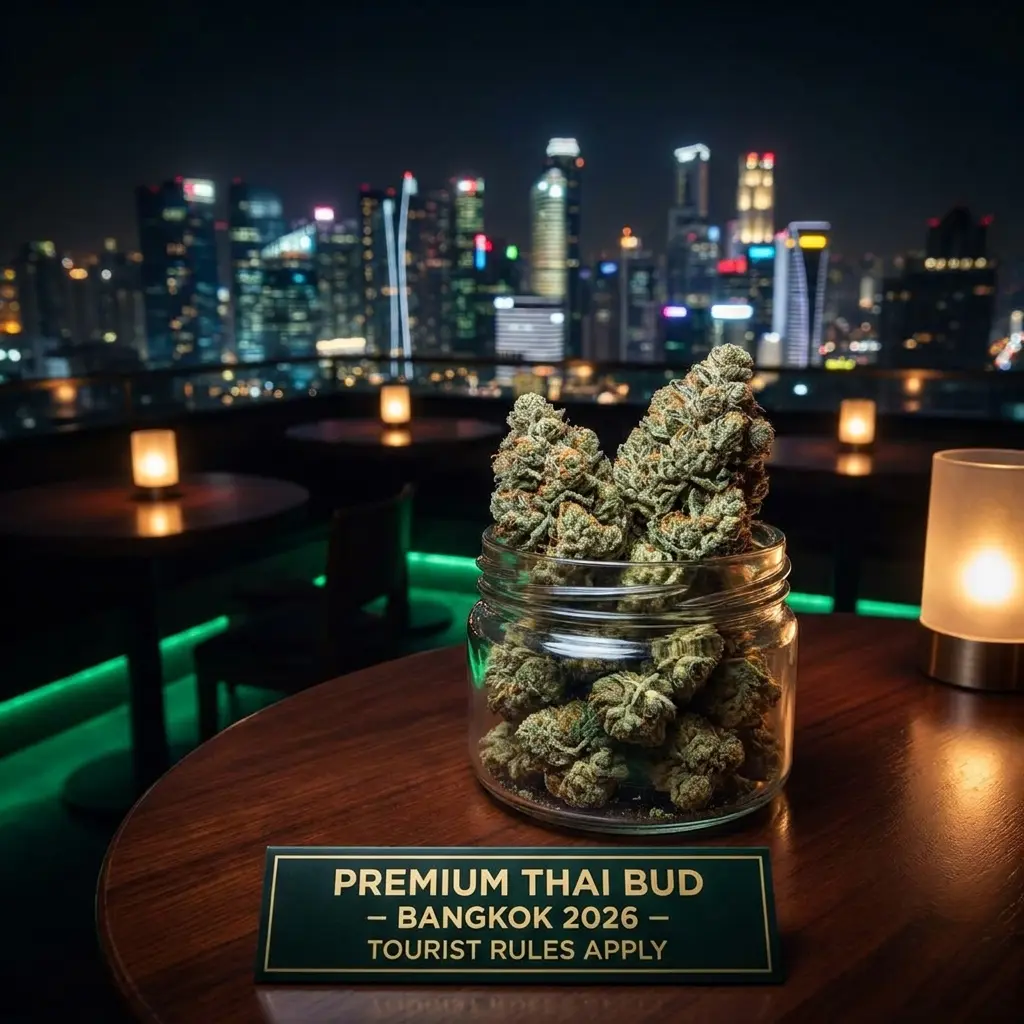
If you are asking “is weed legal in Thailand” in 2026, the short answer is: cannabis is legal for medical use only. Since June 2025, Thailand cannabis laws require every buyer, Thai or foreign, to hold a PT33 prescription from a practitioner licensed in Thailand before a shop can sell cannabis flower. You will still see dispensaries in Bangkok, especially around Sukhumvit, Asok, Nana, Phrom Phong and Thonglor, but the rules are much tighter than during the wide-open period after decriminalization in 2022.
For visitors, the practical question is not just “can you find weed?” but “can you buy, carry, and use cannabis without creating legal problems?” This guide explains the current weed rules in Thailand, what tourists should know, where the grey areas are, and how to behave responsibly in Bangkok’s cannabis scene.
Thailand Cannabis Laws 2026 at a Glance
| Rule | What it means in 2026 |
|---|---|
| Legal status | Medical use only since June 2025; recreational use is not the legal basis |
| Prescription | A PT33 prescription is required to buy cannabis flower |
| Minimum age | 20 years |
| Pregnant or breastfeeding | Not permitted |
| Prescription validity | Up to 30 days; no refills |
| Foreign medical cards | Not recognised |
| Public smoking | Not allowed; nuisance fines up to 25,000 THB |
| Import or export | Illegal without government permission |
Is Weed Legal in Thailand Right Now in 2026?
Yes, cannabis is still legal in Thailand, but in 2026 it is best understood as medical cannabis under regulation, not recreational legalization. Thailand decriminalized cannabis in 2022, which led to a fast-growing dispensary culture. In June 2025, the Ministry of Public Health reclassified cannabis flower as a controlled herb and made a prescription mandatory for every purchase.
That means cannabis flower, extracts, CBD products, edibles, and other cannabis-related products may be treated differently depending on THC content, product type, licensing, prescription status, and intended use.
For a normal consumer, the practical rule is simple: get a valid PT33 prescription first, then buy only from a licensed shop that checks it. A shop that sells cannabis flower without asking for a prescription is not operating within the rules.
In everyday Bangkok life, this means the market still exists, but it is more cautious. A legitimate dispensary should not feel like a street hustle. Staff should be able to explain product origin, strength, intended use, and what information they need from you before purchase.
What changed after Thailand decriminalized cannabis?
Thailand’s cannabis legalization story is unusual. In 2022, cannabis was removed from the narcotics list, creating one of Asia’s most visible legal cannabis markets almost overnight. Shops opened quickly in tourist zones, nightlife districts, beach towns, and residential neighborhoods.
In late June 2025, the rules changed: cannabis flower became a controlled herb, and licensed shops may now sell it only to customers holding a PT33 prescription. The result is not a return to prohibition, but it is also not the relaxed recreational model some tourists expect from Amsterdam, California or Canada.
- Buying cannabis flower requires a PT33 prescription from a practitioner licensed in Thailand.
- Dispensaries can still operate if they comply with Thai licensing and medical rules.
- Recreational use is not the official legal basis for cannabis access in 2026.
- Public smoking can create legal trouble, especially if it causes nuisance.
- Importing or exporting cannabis remains illegal without proper government permission.
- Products are regulated differently, especially extracts, edibles, and CBD.
The June 2025 Prescription Rule and PT33
PT33 (Por Thor 33) is Thailand’s official prescription form for cannabis. It is issued and signed by a licensed practitioner, not filled in by the patient, and records your details, the reason for treatment, and the type and amount of cannabis you may buy. Licensed shops must see a valid PT33 before selling cannabis flower.
Who can issue a PT33 prescription?
Only practitioners licensed in Thailand and trained to prescribe cannabis can issue a PT33. These include medical doctors and Thai traditional medicine practitioners, among other licensed professions. A prescription or medical card from another country does not count.
The key PT33 rules
- You must be 20 years of age or older
- Pregnant and breastfeeding women are not eligible
- A prescription is valid for up to 30 days and cannot be refilled
- You may buy only the type and amount written on your prescription
- Thai citizens, expats and visitors can all apply
Visiting Bangkok? You can get a PT33 prescription in Bangkok before you arrive by sending your details online for review by a licensed practitioner.
Can Tourists Buy Weed in Thailand?
Tourists may encounter dispensaries that serve foreigners, especially in Bangkok, Phuket, Pattaya, Chiang Mai, and island destinations. However, in 2026 the important point is that legal access is tied to Thailand’s medical cannabis framework.
Thailand does not operate like U.S. states with a “medical marijuana card” system, and foreign cards are not recognised. Instead, every buyer, Thai or foreign, needs a PT33 prescription from a practitioner licensed in Thailand. With a valid prescription and passport, tourists aged 20 or over can buy from licensed dispensaries.
A serious shop should be comfortable explaining what is required before selling. If staff seem vague, pressure you to buy quickly, or treat legal compliance as a joke, that is a red flag.
What tourists should expect at a compliant Bangkok dispensary
In more professional shops around Sukhumvit, Phrom Phong, or Thonglor, the atmosphere is often closer to a wellness retail space than a party shop. You may see sealed jars, printed strain information, staff explaining THC levels, and a quieter lounge-like setup.
Common things a legitimate shop may ask for include:
What a licensed Bangkok dispensary will ask for:
- A valid PT33 prescription
- Your passport or Thai ID, matching the name on the prescription
- Proof that you are at least 20 years old
- Confirmation that you are not pregnant or breastfeeding
- Agreement not to consume in public or disturb others
Staying near Nana, Asok or Khao San Road? Our guide to where you can smoke cannabis in Bangkok covers lounges, hotels and the places to avoid.
Can you bring cannabis to Thailand?
No. Do not bring cannabis into Thailand. This includes flower, vape cartridges, edibles, oils, gummies, capsules, and products you legally bought in another country.
Thailand’s domestic cannabis rules do not give travelers permission to import cannabis. Airport customs is a separate legal environment, and cannabis found in luggage can create serious problems. The same applies when leaving Thailand: do not take cannabis products out of the country.
This is one of the most common mistakes tourists make. Something purchased legally in Bangkok should stay in Thailand and be used only within the legal boundaries that apply locally.
Can You Smoke Weed in Thailand?
Smoking cannabis is where many visitors get into trouble. Buying from a legal source does not mean you can smoke anywhere. In Thailand, public smoking may be treated as a public nuisance, especially if the smell affects others.
In Bangkok, cannabis smoke stands out quickly in busy pedestrian zones, hotel balconies, condo corridors, BTS station areas, markets, malls, and nightlife streets. Even if no one confronts you directly, complaints can reach building security, hotel management, local authorities, or shop operators.
The safest rule is: do not smoke cannabis in public places. Use only private, permitted spaces where cannabis consumption is clearly allowed.
Is smoking cannabis in Bangkok allowed?
It depends on the place. Bangkok is not one uniform cannabis zone. The vibe around lower Sukhumvit is very different from a quiet residential condo in Ekkamai or a family hotel in Phrom Phong.
Places where smoking is usually a bad idea include:
- BTS and MRT stations or walkways
- Shopping malls and mall entrances
- Public parks
- Temple areas
- Hotel balconies unless the hotel clearly permits it
- Condo balconies and shared corridors
- Street food zones where smoke affects nearby diners
- Nightlife streets where police visibility is higher
Private cannabis lounges, where legally operated and properly controlled, are a different situation. In areas like Thonglor and parts of Sukhumvit, lounges often lean toward discreet seating, air filtration, and slower-paced service rather than loud bar energy. Staff may ask customers to consume modestly, avoid bothering other guests, and keep the smell contained.
What about hotels and resorts?
Do not assume cannabis is allowed because Thailand has dispensaries. Many hotels, serviced apartments, and resorts prohibit smoking cannabis on the property. Some treat it the same as tobacco smoking; others are stricter because of guest complaints and odor issues.
If you are staying at a Bangkok hotel near Asok or Nana, remember that balconies, hallways, and bathrooms are not truly private from a management perspective. Smoke travels. Fines from the hotel may be separate from any legal issue.
If cannabis use is part of your travel plan, ask clearly before booking, or choose one of the cannabis-friendly hotels in Bangkok that allow consumption in a designated area.
Where Is Cannabis Legal in Thailand?
Cannabis rules apply nationally, but local enforcement and venue culture can feel different depending on where you are. Bangkok has the most visible range of dispensaries, from small street-facing shops to premium lounges near BTS stations. Phuket and Pattaya are more tourist-driven. Chiang Mai often has a calmer, wellness-focused cannabis scene.
Still, the same core principles apply across the country: licensed supply, medical-use framing, no public nuisance, no underage sales, no importing or exporting, and no careless use around people who did not consent to be exposed to cannabis smoke.
Bangkok cannabis neighborhoods: what to expect
Sukhumvit and Asok: Convenient for tourists, dense with hotels, restaurants, and nightlife. Cannabis Shop in Sukhumvit often serve international customers, but the area is also heavily visible, so public smoking is risky.
Nana: More nightlife-oriented and sometimes more casual in atmosphere. Be extra careful about street smoking, intoxication, and buying from anyone who is not clearly operating as a licensed shop.
Phrom Phong: More polished and residential, with malls, Japanese restaurants, and higher-end hotels. Cannabis venues here often feel more discreet and service-focused.
Thonglor and Ekkamai: More upscale and lifestyle-driven. Lounges may focus on comfort, atmosphere, curated strains, and experienced customers rather than bargain shopping.
Khao San Road: Backpacker-heavy and lively, but not a free-for-all. The combination of alcohol, crowds, and public spaces can make cannabis mistakes more visible.
Weed Rules in Thailand: What Is Allowed, Restricted, or Risky?
Thai cannabis law can feel confusing because different product types are regulated in different ways. Flower, extracts, oils, CBD products, edibles, and hemp products do not always sit in the same legal category.
For consumers, the safest approach is to think less in terms of “weed is legal” and more in terms of “this product, from this licensed seller, for this permitted use, in this permitted place.”
Flower
Cannabis flower remains the product most people associate with Thailand’s dispensary scene. Since June 2025, flower is a controlled herb: licensed shops may sell it only to customers with a valid PT33 prescription, and only in the type and amount the practitioner has prescribed.
Extracts and THC limits
Thailand has historically drawn a legal line around extracts containing more than 0.2% THC by weight. This is especially relevant for oils, concentrates, tinctures, and processed products. Flower is handled differently from extracts, which is why THC-limit explanations can be confusing online.
If a product looks highly processed, highly concentrated, or unusually potent, ask the shop to explain its legal status. Avoid unlabelled oils, mystery cartridges, or products without proper packaging.
CBD and hemp products
CBD products containing no more than 0.2% THC do not require a prescription.
Buy CBD from licensed Thai retailers or pharmacies that can explain ingredients, THC content, and usage instructions. This is especially important if you are drug-tested for work or travel.
Edibles
Edibles are one of the easiest areas for tourists to misunderstand. A cookie, brownie, or gummy may feel less serious than smoking flower, but Thai rules around cannabis-infused food and processed products can be stricter.
Edibles bought with a prescription should be treated with the same care: start low and wait.
Vaping cannabis
Be very careful with vaping in Thailand. Many travelers do not realize that general vape laws in Thailand are strict, regardless of whether the device contains nicotine, CBD, or THC. Cannabis vape cartridges can also raise separate concerns around extracts, import status, and device legality.
Possession, Age Limits, Cultivation, and Penalties
Thailand’s cannabis laws are not just about buying. Possession, age, cultivation, advertising, public use, and transport can all matter. Enforcement may vary, but visitors should not rely on “everyone does it” as a legal strategy.
Age limits
Cannabis cannot be sold to anyone under 20, or to pregnant or breastfeeding women. Reputable Bangkok dispensaries check ID carefully and match it against your prescription.
If a shop does not care about ID, that is not a convenience; it is a sign the business may not be operating responsibly.
Possession limits in Thailand
Thailand does not work like countries with a simple recreational limit such as “X grams per person.” Under the prescription system, the amount you may buy and carry is the amount written on your PT33 prescription. Keep the prescription with your purchase.
Do not carry large amounts around Bangkok. Do not separate products into multiple bags. Do not carry cannabis into airports, government buildings, temples, schools, or nightlife venues with security checks. Keep legal purchase documentation if provided by the shop.
Cultivation rules in Thailand
Cannabis cultivation in Thailand is regulated and may require registration, licensing, or compliance with specific rules depending on scale and purpose. This matters more for residents and businesses than short-term visitors.
Tourists should not attempt to grow cannabis in a rented villa, hotel room, condo, or long-stay apartment. Even if the plant itself is not treated the way it was before decriminalization, cultivation without the right permissions can create legal and landlord problems.
Public nuisance and penalties
Cannabis smoke that creates a public nuisance can lead to fines of up to 25,000 THB. Buying or using cannabis without a valid prescription is also not permitted under the June 2025 rules.
More serious penalties can apply for illegal import/export, sales without proper licensing, distribution to prohibited groups, unapproved products, or conduct involving narcotics laws beyond the cannabis framework.
The practical takeaway: legal cannabis access in Thailand does not protect careless behavior.
How to Buy Cannabis Legally and Safely in Bangkok
A good Bangkok dispensary should feel transparent. Staff should be willing to slow the conversation down, especially for beginners. If a first-time customer asks for “the strongest strain,” responsible staff usually steer the conversation toward tolerance, setting, timing, and comfort instead of simply selling the highest THC option.
That matters in Bangkok because the city can be intense: heat, traffic, crowded BTS platforms, unfamiliar food, jet lag, alcohol, and nightlife all change how cannabis feels. A strain that seems manageable in a lounge may feel overwhelming in a Grab car stuck on Sukhumvit Road . At High Thai Weed, you can check every strain and price on our cannabis menu before you visit. What to bring: your PT33 weed prescription, your passport or Thai ID with a name that matches it, and proof that you are 20 or older. Keep your receipt and prescription together with your purchase. Many licensed Bangkok shops now accept cards or QR payments, but carrying some cash helps at smaller shops.
Signs of a more trustworthy dispensary
- Asks for your PT33 prescription and ID before selling
- Clear licensing or business registration information
- Staff who can explain product strength and expected effects
- Sealed or properly stored products
- No pressure to consume immediately
- No encouragement to smoke in the street
- Reasonable advice for beginners
- Transparent pricing without surprise add-ons
Beginner pacing advice
If you are new to cannabis or returning after a long break, Thailand is not the place to prove your tolerance. Many strains sold in Bangkok are stronger than casual users expect.
- Start with a small amount.
- Avoid mixing cannabis with heavy alcohol.
- Do not consume right before a flight, temple visit, business meeting, or long taxi ride.
- Eat first and stay hydrated.
- Choose a calm, private setting.
- Give edibles plenty of time before taking more.
For more red flags, see our guide on how to spot fake or low-quality weed in Bangkok.
FAQ: Thailand Cannabis Law 2026
Is weed still legal for tourists in Thailand?
Yes, for medical use. Tourists aged 20 or over can buy cannabis from licensed dispensaries with a valid PT33 prescription from a practitioner licensed in Thailand. Foreign medical cards are not accepted, public consumption is not allowed, and cannabis must never be taken into or out of Thailand.
Does Thailand still have dispensaries?
Yes, Thailand still has dispensaries, especially in Bangkok and major tourist destinations. Licensed shops must check your PT33 prescription and ID before selling cannabis flower.
Can you smoke weed in public in Bangkok?
No, you should not smoke cannabis in public in Bangkok. Public smoking can be treated as a nuisance and may lead to complaints, fines, or problems with police, hotels, building security, or venue staff. Use only private spaces where cannabis consumption is clearly allowed.
Are weed cafes legal in Thailand?
Some cannabis cafes or lounges may operate legally if they follow Thai rules, but not every venue calling itself a “weed cafe” is automatically compliant. A safer venue will control where people consume, check age, avoid disturbing neighbors, and follow current licensing requirements.
Can I bring cannabis from Thailand to another country?
No. Do not take cannabis out of Thailand. Even if you bought it legally from a Thai dispensary, exporting cannabis without proper government permission is illegal and can also violate the laws of your destination country.
Is cannabis legal at Thailand resorts and hotels?
Only if the property allows it, and usually only in designated areas. Many hotels and resorts ban cannabis smoking because of odor, guest complaints, and legal concerns. Always ask before consuming, and do not assume a balcony counts as a private cannabis space.
Thailand’s cannabis scene in 2026 is still active, but it rewards people who understand the difference between availability and legality. In Bangkok, the safest experience is simple: get a valid PT33 prescription, buy from a licensed shop, use cannabis only where permitted, avoid public smoke, and never travel across borders with any product.