★ Bangkok: Free Delivery 🛡️ Nationwide: Fast & Secure Shipping





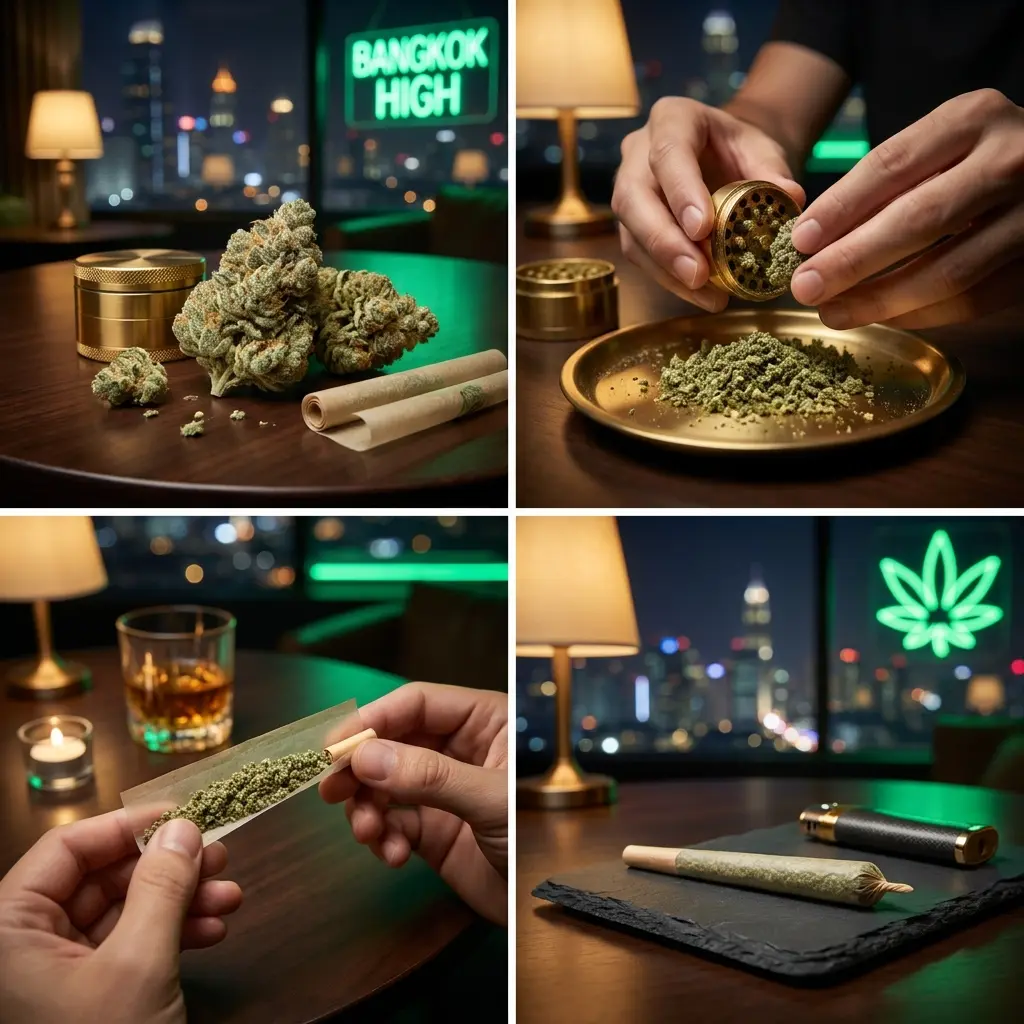
Learning how to roll a joint is partly technique and partly feel. The difference between a smooth, even-burning joint and one that keeps canoeing usually comes down to grind texture, airflow, paper tension, and how evenly the flower is packed. In Bangkok, especially around Sukhumvit, Asok, Thonglor, and Ekkamai, many visitors buy good flower but struggle with the final step: turning it into something that smokes cleanly without wasting it. This guide breaks down how to roll a joint step by step, with practical details for beginners and small adjustments that make a big difference.
What You Need Before You Roll
A good joint starts before the paper is even opened. If your flower is too wet, too dry, too chunky, or packed unevenly, the roll will fight you from the beginning.
For the easiest first attempt, prepare everything on a flat, dry surface. Hotel balconies, rooftop lounge tables, and outdoor smoking corners around Bangkok can be breezy, so keep your ground flower in a tray or grinder lid rather than loose on the table.
- Cannabis flower: Use flower that feels slightly springy, not damp and not powder-dry.
- Rolling papers: King-size slim papers are common, but beginners may find 1¼ papers easier to control.
- Filter tip or crutch: This improves airflow, keeps flower out of your mouth, and gives the joint structure.
- Grinder: A medium grind burns more evenly than hand-torn chunks.
- Small tray: Useful for catching loose flower and kief.
- Packing tool: A pen tip, chopstick end, or folded paper edge can work.
If you are still choosing flower, bud structure matters. Fluffy, well-cured flower is usually easier to roll than overly sticky, dense buds that clump together. For better results, start by choosing the right cannabis strains for rolling, especially if you want a smooth burn rather than a heavy, resinous smoke.
How to Roll a Joint Step by Step
Step 1: Grind the Flower to the Right Consistency
The ideal joint consistency is fluffy and even, not dusty. If the grind is too fine, airflow can become tight and the joint may feel harsh. If the pieces are too large, the paper may bulge, burn unevenly, or go out halfway through.
For most joints, use around 0.4 to 0.7 grams of flower. Beginners often overpack because the joint looks too slim at first. Once it is rolled and shaped, that same amount usually fills out properly.
If your flower is very sticky, let it sit open for a few minutes before grinding. Bangkok humidity can make some buds feel softer than expected, especially after being carried around in a pocket or bag. Slightly drier flower rolls and burns more predictably.
Step 2: Prepare the Filter Tip
Do you need a filter tip for a joint? Technically no, but for beginners it makes rolling much easier. A crutch gives the joint a firm end to roll around and helps stop the mouthpiece from collapsing.
To make one, fold the end of a cardboard filter back and forth into a small accordion shape, then roll the remaining card around it. The final tip should be firm but not blocked. If it is too tight, the draw will feel restricted.
Place the filter at one end of the rolling paper, usually on the side of your dominant hand. If you are right-handed, many people place it on the right. If you prefer a cone shape, the filter end stays narrower while the far end gets more flower.
Step 3: Fill the Paper Evenly
Lay the paper with the glue strip facing up and away from you. Add the ground flower in a gentle line from the filter to the far end. For a straight joint, keep the amount consistent along the paper. For a cone joint, use less near the filter and gradually more toward the tip.
The key to how to fill a joint evenly is not dumping flower into one thick pile. Sprinkle it in layers, then lightly tap the paper so the flower settles. Avoid leaving gaps near the filter, because that can cause weak airflow and loose burning at the mouthpiece.
If you want to roll a slim joint, keep the flower line narrow and avoid overfilling the center. If you want a thick joint, use a wider paper and increase the amount gradually, but remember that airflow matters more than size. A fat joint packed badly is less enjoyable than a slim one rolled cleanly.
Step 4: Shape Before You Seal
This is where most beginner joints improve quickly. Hold the paper between your thumbs and index fingers, with the flower sitting in the fold. Gently roll the paper back and forth to shape the cannabis into a cylinder or cone.
Do not try to lick and seal immediately. Spend a few seconds shaping the contents first. The goal is to make the flower sit evenly inside the paper so there are no soft empty pockets or hard lumps.
If flower spills out, you probably added too much or rolled too aggressively. Tip the extra back into your tray and continue. Rolling is easier when the joint is slightly underfilled than when it is overloaded.
Step 5: Tuck the Paper and Roll Tight Enough
The tuck is the hardest part of most joint rolling tutorials. Start at the filter end, because the filter gives you something firm to wrap around. Use your thumbs to tuck the lower edge of the paper around the shaped flower, then slowly roll upward.
How to twist a joint tight is really about even pressure, not squeezing hard. Too loose, and the joint burns fast with air pockets. Too tight, and it becomes difficult to pull smoke through. Aim for a firm roll that still has a little give when you lightly press it.
If the paper creases, pause and smooth it gently rather than forcing the roll. Thin papers can tear if handled with wet fingers or rough pressure, especially in humid conditions.
Step 6: Seal, Pack, and Finish
Once the paper is rolled around the flower, lightly moisten the glue strip and press it down from the filter end toward the tip. Do not soak the paper. Too much moisture can weaken the seal and make the joint burn unevenly at the start.
To pack a joint properly, hold it filter-side down and gently tap it on a tray or table. Use a packing tool to press the open end lightly. You are not trying to compress it into a brick; you are just removing loose air pockets.
Finally, twist the open end closed. The twist should be snug enough to hold the flower in place but not so tight that it creates a dense plug. Before lighting, roll the joint between your fingers once more to check for soft spots.
Choosing Papers, Filters, and Tools
What papers to use for rolling a joint depends on your skill level and preferred burn. Very thin rice or hemp papers can taste cleaner but are less forgiving. Standard unbleached papers are easier for beginners because they hold shape better and do not tear as easily.
In Bangkok dispensaries, you will commonly see king-size slim papers, 1¼ papers, pre-rolled cones, glass tips, and paper filter booklets. If you are new, do not feel pressured to start with the thinnest premium paper. A slightly sturdier paper often produces a better first roll.
- 1¼ papers: Good for smaller personal joints and easier control.
- King-size slim papers: Better for sharing, cone joints, or longer sessions.
- Hemp papers: Popular for a slower, natural-feeling burn.
- Rice papers: Thin and clean-tasting, but harder to handle in humid weather.
- Pre-rolled tips: Useful if you struggle with making a crutch by hand.
If you want a simple setup, look for rolling accessories like papers and grinders before you start. A proper grinder and decent filter tips make more difference than most beginners expect.
How to Roll a Cone Joint, Slim Joint, or Thick Joint
How to Roll a Cone Joint
A cone joint is wider at the burning end and narrower at the filter. It is popular because it lights easily, looks clean, and can hold more flower without making the mouthpiece bulky.
To roll a cone joint, place the filter at one end and build the flower line gradually thicker toward the opposite end. When shaping, angle the paper slightly so the filter end stays compact while the top end opens wider. Seal carefully, then pack from the open end to remove gaps.
Beginners may find pre-rolled cones easier, but hand-rolling a cone gives more control over airflow. The main mistake is making the tip too heavy and the filter end too empty, which causes loose burning near the mouthpiece.
How to Roll a Slim Joint
A slim joint is ideal for solo use or for beginners who want to pace themselves. Use less flower, keep the line narrow, and choose a smaller paper if possible. A long paper with too little flower can become floppy and difficult to seal.
When rolling slim, the filter size matters. A thick filter with very little flower creates an awkward shape. Use a smaller crutch or roll the filter tighter so the body of the joint matches the mouthpiece.
How to Roll a Thick Joint
A thick joint needs structure. Use a larger paper, spread the flower evenly, and take extra time shaping before sealing. If you simply add more cannabis without shaping it, the joint can burn hot on one side and barely burn on the other.
For group sessions, especially in lounges around Phrom Phong or Thonglor where people may pass a joint slowly while talking, a thick joint should be packed evenly but not overly tight. If it sits between pulls, poor airflow becomes obvious quickly.
How to Make the Joint Burn Evenly
The best way to roll a joint is to think about airflow from the beginning. Most problems happen because the flower is uneven, too moist, too dry, or packed with hidden gaps.
If you are wondering why your joint burns unevenly, check these common causes:
- Uneven grind: Large chunks burn slower than fine pieces.
- Loose pockets: Empty spaces make one side burn faster.
- Overpacking: A tight joint restricts airflow and may go out repeatedly.
- Poor seal: Air leaks along the glue strip can create runs.
- Bad lighting technique: Lighting only one side starts a canoe immediately.
- Wind: Outdoor smoking areas and rooftop spaces can make one side burn faster.
To avoid a canoeing joint, rotate it while lighting and let the tip glow evenly before taking a full pull. Think of it like toasting the end rather than setting it on fire. If one side starts running, lightly moisten the fast-burning edge or hold the slower side downward for a moment while taking a gentle pull.
How to prevent runs and leaks in a joint also comes down to the seal. Make sure the glue strip is fully closed, especially near the filter. If smoke escapes from the side while pulling, the paper may not be sealed or the joint may have a tear.
Using Grinder Kief Without Ruining the Burn
Rolling a joint with grinder kief can make it stronger, but it can also make it burn badly if you use too much. Kief is fine and resin-rich, so it can block airflow when packed in thick layers.
The best method is to sprinkle a light line of kief through the middle of the flower, not directly against the paper and not in one heavy clump. Cover it with a small layer of ground flower before rolling. This helps it burn more evenly and reduces the chance of a sticky, clogged section.
For beginners, use less kief than you think. In Bangkok, tourists sometimes underestimate potency after buying premium flower, especially if they are used to lower-strength products elsewhere. A little kief can noticeably change the experience, so pace your session and avoid mixing too many strong products at once.
Common Joint Rolling Mistakes and Easy Fixes
The Joint Is Too Loose
If the joint feels soft and bends easily, it may burn too fast or unevenly. Tap it filter-side down and gently pack the open end. If it is already sealed, roll it between your fingers to redistribute the flower. Next time, spend more time shaping before sealing.
The Joint Is Too Tight
If you can barely pull air through it before lighting, it is overpacked or compressed too firmly. You can try gently massaging the joint to loosen it, but if it is fully blocked, it may be better to open it and reroll. Tight joints often waste more flower than they save.
The Paper Tears
Small tears can sometimes be patched with a tiny piece of rolling paper using the glue edge. If the tear is large or near the filter, rerolling is usually cleaner. Wet fingers, sharp stems, and overstuffed papers are the usual causes.
The Joint Keeps Going Out
This can happen when the flower is too moist, the roll is too tight, or the grind is uneven. Letting the flower breathe for a short time before rolling can help. Avoid drying cannabis under harsh sun or direct heat, which can damage aroma and make the smoke rough.
The Joint Tastes Harsh
Harshness may come from dry flower, too much paper, poor airflow, or pulling too hard. Take slower, lighter pulls and avoid overheating the cherry. A smooth joint is not only about the roll; it is also about pacing.
Bangkok Etiquette: Where and How to Smoke After Rolling
Rolling a joint well is only half the experience. Knowing where to smoke matters in Bangkok, where cannabis culture exists alongside hotels, restaurants, condos, and public spaces with mixed attitudes toward smoke.
Avoid lighting up on busy sidewalks, near BTS entrances, outside family restaurants, or in front of hotels unless there is a clearly designated smoking area. Even if you see others smoking cigarettes nearby, cannabis smoke can attract more attention because of the smell.
Private lounges and cannabis-friendly venues usually expect a calmer approach. In areas like Sukhumvit, Nana, and Asok, tourist-facing spots may be more casual, while Thonglor and Ekkamai lounges often lean more discreet and comfort-focused. Staff may offer ashtrays, ventilation guidance, or advice on pacing if you are new.
If you are visiting Thailand, check current rules and make sure you are buying legal cannabis before you roll. Regulations and enforcement expectations can change, and responsible consumption protects both you and the venue hosting you.
FAQ: How to Roll the Perfect Joint
How much weed should I put in a joint?
For most beginners, 0.4 to 0.7 grams is enough. Smaller joints are easier to control and better for pacing. Larger joints can work for groups, but they need more careful shaping and packing to burn evenly.
Do you need a filter to roll a joint?
You do not strictly need one, but a filter or crutch makes the joint easier to roll, improves airflow, and stops small pieces of flower from reaching your mouth. For beginners, using a filter is strongly recommended.
How long should a joint be?
A personal joint is usually around the length of a 1¼ paper, while king-size slim papers are better for longer cone joints or sharing. Length matters less than even packing and good airflow.
What is the best way to seal a rolled joint?
Lightly moisten the glue strip, then press it down evenly from the filter end toward the tip. Use just enough moisture to activate the glue. Too much can weaken the paper and cause uneven burning.
How do I fix a poorly rolled joint?
If it is too loose, gently pack and tap it. If it is too tight, massage it lightly or reroll it. If it is canoeing, rotate the joint while lighting, slow down your pulls, and correct the fast-burning side before it runs too far.
Can I roll a joint without a grinder?
Yes, but break the flower down carefully by hand and remove stems. Try to create an even texture rather than large chunks. A grinder is still better because consistent flower size helps the joint burn evenly.
Final Tips Before You Light Up
The perfect joint is not about rolling the biggest one or using the fanciest paper. It is about balance: even grind, steady shape, firm-but-open airflow, and a clean seal. Start smaller, use a filter, and pay attention to how the joint feels before lighting it.
If you plan to enjoy your roll in Bangkok, choose a respectful setting and follow local expectations. A comfortable venue with clear smoking lounge etiquette and rules will usually give you a better experience than rushing a joint somewhere public and windy.